Hair Restoration Options to Restore Confidence and Natural Hair Growth

Hair restoration has become an increasingly popular solution for individuals seeking to regain their confidence and natural hair growth. With advancements in medical technology, the options available today are more effective and accessible than ever before. Hair loss can be a distressing experience, impacting not only one’s appearance but also self-esteem. Fortunately, there are several hair restoration methods that cater to different needs and preferences.
One of the most well-known procedures is hair transplantation. This surgical method involves removing hair follicles from a donor site, typically the back or sides of the head where hair is more resistant to balding, and transplanting them to areas experiencing thinning or baldness. The two primary techniques used in hair restoration transplantation are Follicular Unit Transplantation (FUT) and Follicular Unit Extraction (FUE). FUT involves removing a strip of scalp containing healthy follicles, while FUE extracts individual follicles directly from the scalp. Both methods have proven successful in providing natural-looking results.
For those seeking non-surgical solutions, there are numerous treatments available that stimulate natural hair growth. Low-Level Laser Therapy (LLLT) is one such option that uses laser light to penetrate the scalp, encouraging increased blood flow and stimulating follicle activity. This therapy can be performed at specialized clinics or with home-use devices designed for convenience.
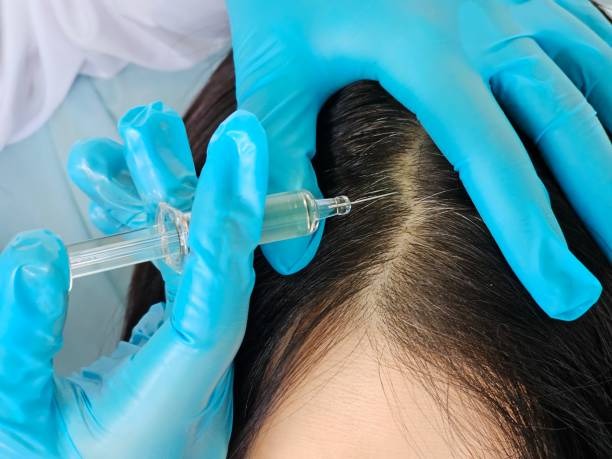
Another non-invasive treatment gaining popularity is Platelet-Rich Plasma (PRP) therapy. PRP involves drawing a small amount of blood from the patient, processing it to concentrate platelets rich in growth factors, and injecting it into areas affected by hair loss. These growth factors promote healing and tissue regeneration, potentially leading to improved hair density over time.
Topical treatments remain a staple in the fight against hair loss as well. Minoxidil is an FDA-approved topical medication known for its ability to slow down or even reverse certain types of baldness when applied consistently over time. Finasteride is another FDA-approved oral medication that works by inhibiting hormones responsible for shrinking hair follicles.
Beyond medical interventions, lifestyle changes can also play a crucial role in restoring natural hair growth. A balanced diet rich in vitamins like biotin and zinc supports healthy follicle function while reducing stress through activities such as yoga or meditation can mitigate hormonal imbalances linked to hair loss.
In conclusion, various options exist for those looking to restore both their confidence and their natural locks—ranging from advanced surgical techniques like FUE transplants to innovative therapies such as PRP injections—all aimed at promoting healthier scalps capable of sustaining lush new growth naturally over time without compromising personal wellness goals along this transformative journey toward renewed self-assurance through revitalized tresses!